Photo File 18.5
Comprising approximately 4,800 objects, the Loeb Art Center’s collection of photography spans the history of the medium, from nineteenth-century objects made by some of photography’s earliest practitioners to works by contemporary artists who continue to expand the possibilities of the medium today. The collection is significant not only to the history of photography as a fine art, but equally in demonstrating the medium’s inherent interdisciplinarity. Photography’s accessibility, and its efficacy as a teaching tool, speaks to its reach across the arts, sciences, politics, consumerism, and history, as well as its relevance to individual and collective identity and expression. Photography is both deeply personal and fundamentally public. The invention, use, and circulation of photography has radically shaped human experiences and perceptions of the modern world. The Loeb’s holdings include important examples of the earliest scientific, political, and social uses of the medium, as well as documentary, travel, architectural, fashion, journalistic, and fine art photography from throughout the twentieth and early twenty first centuries. From early daguerreotypes, tintypes, and cabinet cards to mid-twentieth-century family snapshot albums, the Loeb’s collection exemplifies the importance of photography to the material culture of everyday life.
Collecting photography is foundational for the Loeb. Its holdings began with a group of objects that included seventeen photographs from the personal collection of Vassar College founder Matthew Vassar, which became the founding collection when the museum was established in 1864. The next photographs to enter the collection, gifted in 1967 by Vassar alumna Edna Schwab (née Bryner), were works by Alfred Stieglitz and Edward Weston, two of the most significant twentieth-century practitioners of fine art photography in the United States. Another major expansion of the photography collection occurred in 1973, when funds from The Charles E. Merrill Trust were used to purchase approximately 100 important works, including photographs by Imogen Cunningham, Walker Evans, Laura Gilpin, Danny Lyon, Bea Nettles, Stephen Shore, Aaron Siskind, Brett Weston, and Garry Winogrand. The collection continued to grow in the 1980s, and in 1986, a major gift of 225 photographic objects from the Winston and Jeffrey Adler Collection of Nineteenth-Century Photography created a foundation for the Loeb’s exceptional collection of early photography. Photography has continued to grow into one of the Loeb’s most significant collecting areas, especially through the subsequent efforts of curators Sandra S. Phillips, Joel Smith, and Mary-Kay Lombino. In 1999 the Photography Advisory Council was established to support the sustained collecting and exhibiting of photography at the Loeb. In 2015, the museum received a gift of 525 snapshots from the Peter J. Cohen Collection, one of the most significant private collections of snapshot photographs in North America.
The Loeb’s active collecting of photography continues today with the aim of deepening the collection’s existing strengths and diversifying its representation of photographers and subject matter, especially with regard to race, gender, and nationality. The Loeb’s current collecting practice also represents an interest in the ever-broadening definition of photography as a medium as demonstrated by contemporary artists.
Areas of the Photography Collection
Nineteenth-Century Photography
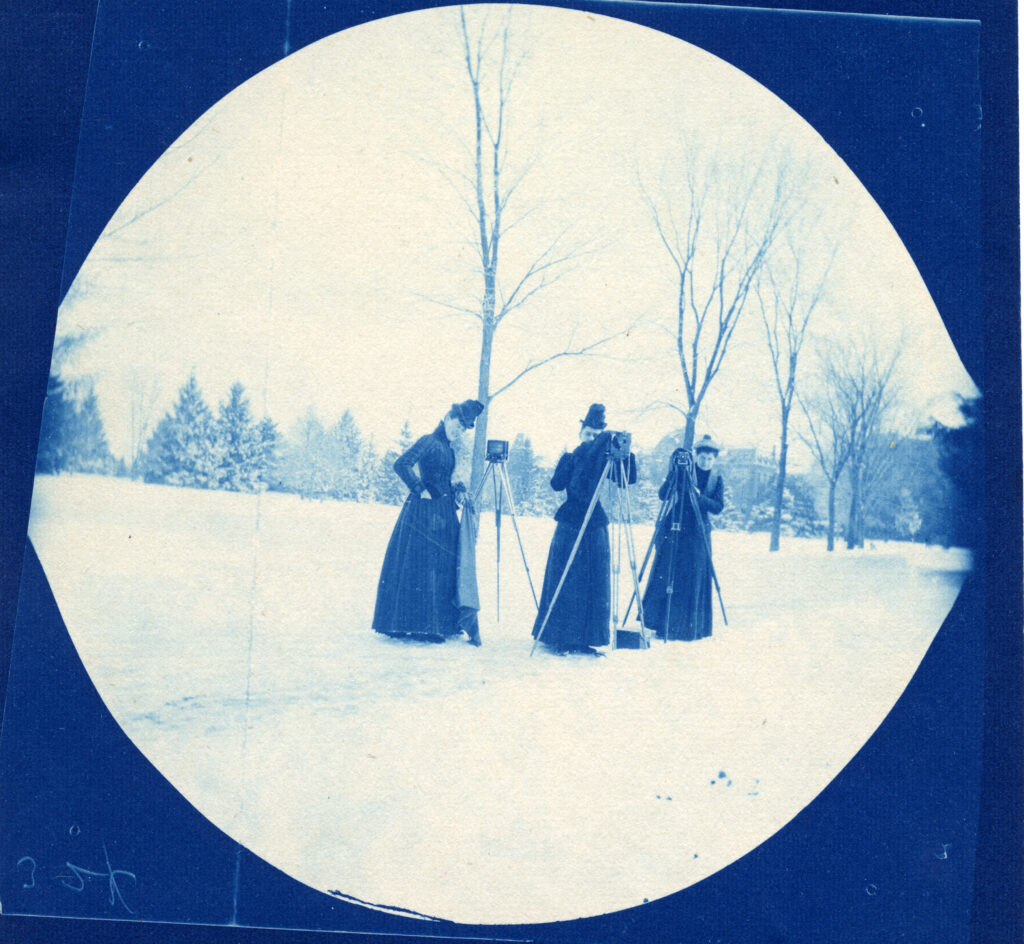
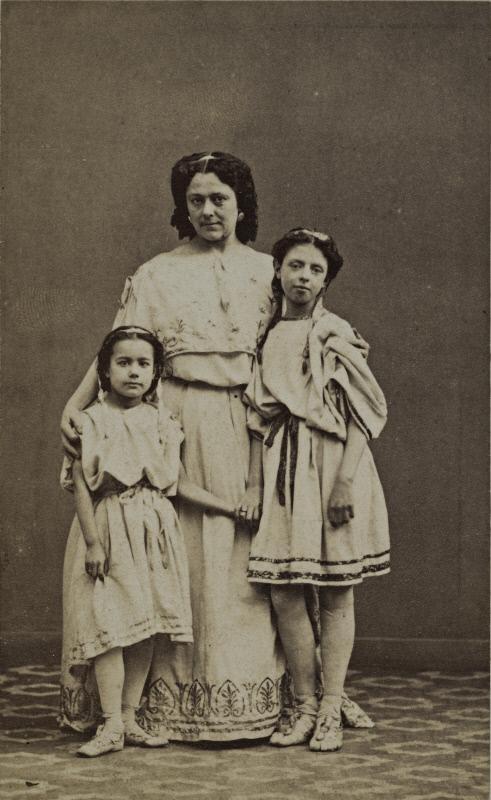
Given that many photographs from the nineteenth century are unique objects, they are relatively scarce today. However, the Loeb’s collection includes a substantial holding of some 700 photographic objects made before 1900. Nineteenth-century photography in the collection exemplifies the earliest uses of the medium and its importance to the histories of science and technology. Highlights of the collection include works by Anna Atkins, Felix Bonfils, Samuel Bourne, Julia Margaret Cameron, Roger Fenton, Francis Frith, Eadweard Muybridge, Charles Marville, Charles Nègre, and thirteen photographs by Giorgio Sommer. These holdings represent many early photographic processes, including the daguerreotype, cyanotype, tintype and ambrotype, calotype and salt print, albumen print, platinum print, and photogravure. This area of collecting also represents popular early uses of photography for the production of cabinet cards (also known as cartes de visite) and stereographs, which were frequently sold and traded.
Street and Documentary Photography
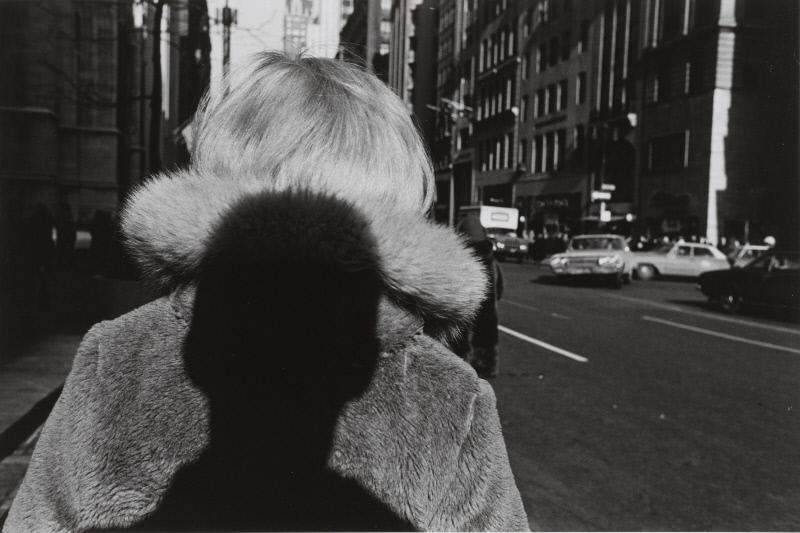
One of the most important areas of the Loeb’s collection is its holdings of photography made in the twentieth century for documentary and journalistic purposes. This part of the collection includes works by forerunners of street photography, including Jean-Eugène-Auguste Atget, Henri Cartier-Bresson, Walker Evans, Helen Levitt, Gordon Parks, and Weegee. Later examples of street photography from the twentieth century include works by Dawoud Bey, Robert Frank, Leon Levinstein, Vivian Maier, and Louis Stettner. Photographers represented in depth include Berenice Abbott, Margaret Bourke-White, Bruce Davidson, Elliott Erwitt, Lee Friedlander, Ken Heyman, Danny Lyon, Joel Meyerowitz, and Garry Winogrand. Highlights also include photography by Dorothea Lange and Arthur Rothstein commissioned by the Farm Security Administration. This area of the collection also includes a number of works made for the purposes of social reform in the early twentieth century, most notably 91 photographs by Lewis Wickes Hine made between 1900 and 1935.
Fine Art Photography
Photography’s many contributions to the history of art span the medium’s beginnings to its most contemporary examples. The collection includes a particular strength in fine art photography made in the United States. These holdings begin chronologically with a significant holding of works associated with the movement known as Pictorialism, which advocated for photography as a fine art and was an important precedent for mid-twentieth century modernist photography. This movement is represented in the collection by platinum prints, palladium prints, photogravures, and gelatin silver prints by Margaret DeMotte Brown, Adolf Fassbender, Gertrude Käsebier, Heinrich Kuhn, Edward Steichen, Karl Struss, and Clarence H. White. Early and mid-twentieth-century modernist photography is also well represented by works of Harry Callahan, Paul Caponigro, Imogen Cunningham, Barbara Morgan, Aaron Siskind, and Alfred Stieglitz. Highlights of the collection include in-depth holdings of work by Andreas Feininger, André Kertész, Paul Strand, and Brett Weston.
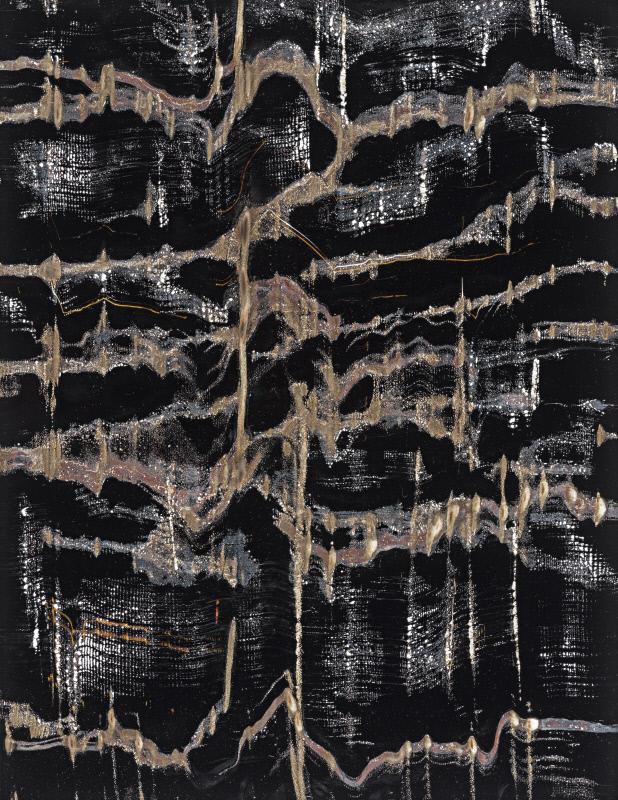
Art photography from the later twentieth century is represented by Gregory Crewdson, Rineke Dijkstra, Louise Lawler, Sherrie Levine, Richard Misrach, Thomas Ruff, Cindy Sherman, Laurie Simmons, Joel Sternfeld, Larry Sultan, and Stephen Shore. Experimental processes and techniques in art photography, such as Polaroids and photograms, are especially well represented through works by Jared Bark, Matthew Brandt, Marco Breuer, Ellen Carey, Chuck Close, Konrad Cramer, Robert Heinecken, Klea McKenna, Bea Nettles, Andres Serrano, Lucas Samaras, and William Wegman. Of the 159 photographic works in the collection by Andy Warhol, 107 are Polaroids. A significant number of photographs in the collection were made by émigré artists making photography in the United States, including André Kertész, Robert Frank, Nari Ward, Andreas Feininger, Joseph Breitenbach, Frank Paulin, Ilse Bing, Jacques Lowe, Rose Mandel, Erika Stone, and Konrad Cramer.
Women & Gender in Photography
Due in large part to the marginalization of women in professional circles, photography made by women remains underrepresented in museum collections and historical narratives. However, of the objects in the Loeb’s collection by known photographers, approximately 20% were made by women. The total proportion of photography by women in the collection is probably closer to 25% given that many photographs attributed to unknown makers were likely made by women as well. (Of approximately 550 unattributed snapshot photographs, many were likely made by women.) Photographs by women encompass scientific, landscape, conceptual, fashion, fine art, documentary, journalistic, and portrait photography, among other genres. This area of depth in the collection overlaps with its strength in street photography and photojournalism, represented through significant holdings by Berenice Abbott, Margaret Bourke-White, Diane Arbus, Ilse Bing, and Grace Robertson. The collection also represents women who practiced photography early on, including Anna Atkins, Jessie Tarbox Beals, Julia Margaret Cameron, and Laura Gilpin.
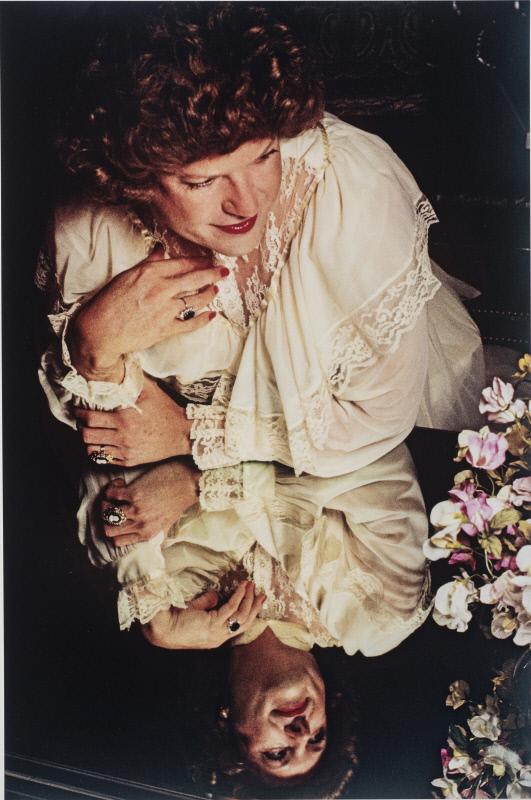
Photography made by women is deeply connected to Vassar’s history as one of the first women’s colleges in the U.S., which became coeducational in 1969. North American portrait photographer and Vassar College alumna Rosalie McKenna is the most represented artist in the Loeb’s collection. With 183 photographs by McKenna, the Loeb’s collection is among the largest public repositories of her work. Highlights also include thirty-six photographs made in the Hudson Valley region by women’s rights activist and Vassar alumna Dorothy Meigs Eidlitz and over fifty landscape photographs taken on Vassar Campus by Lois Conner. The collection also includes work by Vassar alumnae Andrea Baldeck, Rosalind Solomon, Alison Murphy Conner, and Nancy Crampton. The collection includes significant holdings of the pathbreaking work of social documentary photographer and Vassar alumna Mariette Pathy Allen, who created portraits of transgender and gender-nonconforming people in the 1980s and 1990s. These expressions of expansive and inclusive gender representation were important precedents for the increasing visibility of gender fluidity today.
Recent acquisitions of photography made by women, and well as by transgender and nonbinary photographers—many of whom focus on the intersections of gender, sexuality, and race—strengthen the collection as it continues to grow. These include photographs by Nan Goldin, Martine Gutierrez, Leslie Hewitt, Deana Lawson, Melodie McDaniel, Zanele Muholi, Laurel Nakadate, Mickalene Thomas, and Carrie Mae Weems. Such recent acquisitions highlight the relevance of photography to the committed activism at and around Vassar College related to issues of equity and inclusion.
Vernacular Photography
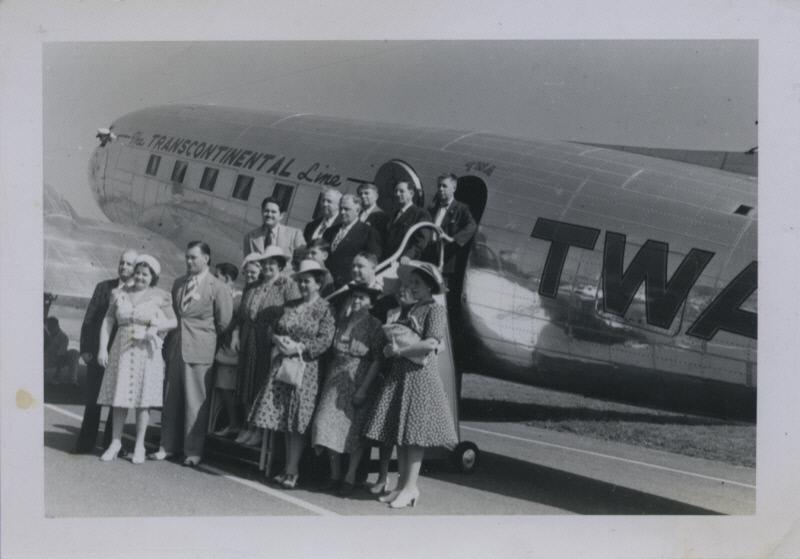
Photography has been omnipresent in everyday life since the earliest handheld cameras became commercially available in the 1880s. The popularity of making and sharing photography continues through smartphone photography and social media platforms today. These practices have resulted in the significant accumulation of what is commonly known as “vernacular photography,” or photography made by non-professionals as part of the activities of everyday life. Given its sheer volume and deep value as testimony to daily life, vernacular photography is an important yet still under-researched area of the medium’s history.
While the study of snapshots and amateur photographic practices remains relatively unusual in art museums, this is a major strength of the Loeb’s collection. In 2015, a total of 525 snapshots from the Peter J. Cohen Collection were gifted to the Loeb. They are invaluable examples of how photography has mediated ways of seeing in every day life. Approximately half of these photographs were taken in the Hudson Valley, likely made by individuals belonging to multiple generations of a single family. Many depict intimate bonds among family members, especially between mothers and children. Ongoing research and efforts to increase the public accessibility of these snapshots illuminate photography as uniquely enmeshed in everyday life, a phenomenon that has only intensified in the twenty-first century.
Portrait Photography
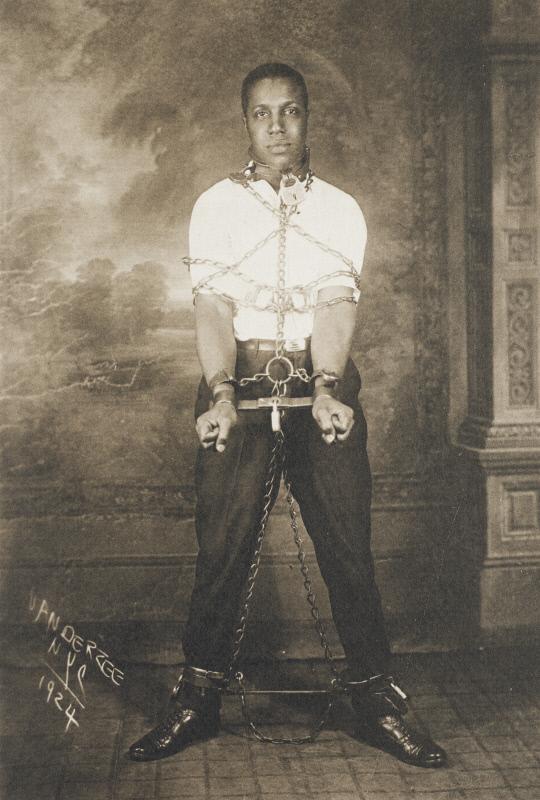
Much of the Loeb’s collection of vernacular photography includes amateur portraits, which connects that part of the collection to its important holdings of professional portrait photography. This area includes in-depth holdings of photographs by Arnold Newman, George Platt Lynes, and Rosalie McKenna. Portrait photography in the Loeb’s collection spans the medium’s history and genres including photojournalism, fashion, documentary, and fine art, represented through important works by Richard Avedon, James Van Der Zee, Sally Mann, Horst P. Horst, Margaret Bourke-White, Rineke Dijkstra, and Andy Warhol. From the early history of photography, portraiture is well represented in the collection by objects that were commonly collected and traded as mementos of acquaintances and loved ones, such as cabinet cards and daguerreotypes. In recent years, the Loeb’s representation of studio portrait photography has expanded to include examples by West African photographers Seydou Keita, Sanlé Sory, and Malick Sidibé.
Photography of Vassar College, Poughkeepsie, and the Hudson Valley
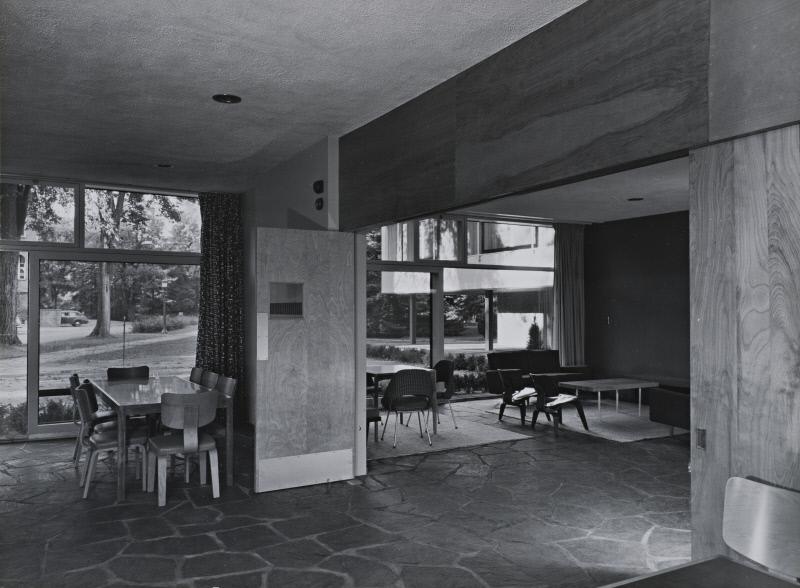
Deeply rooted in the personal and public histories of this region, the Loeb’s collection of photography is not only exceptional in scope, it is also a repository for the particular stories that have shaped Vassar College and the surrounding region. Some 500 works in the Loeb’s collection are connected to the museum’s unique situation on the campus of Vassar College and in the city of Poughkeepsie, Dutchess County, the Hudson Valley, and upstate New York. This locally-rooted area of the photography collection connects the distinct qualities of the Loeb’s collection and Vassar’s own history to larger narratives of photography history, modernism, and visual culture. Works made on and around Vassar campus include photographs by Margaret DeMotte Brown, Paul Strand, André Kertész, Stephen Store, Frank Gohlke, Lois Conner, Tina Barney, Alfred Eisenstaedt, Rosalie McKenna, and Jim Dow.
Japanese Photography
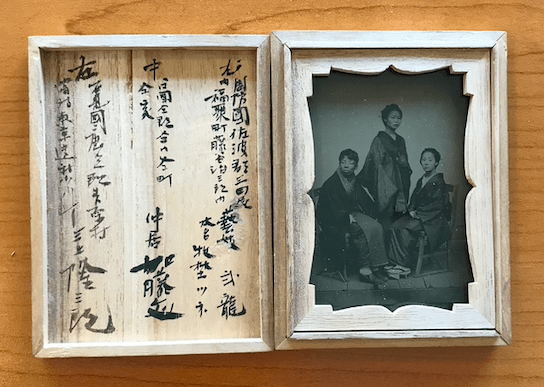
Since the inception of photography, Japan has been an important center for its use, circulation, and innovation. The Loeb’s small but focused collection of Japanese photography spans the medium’s history. Highlights of the collection include nineteenth-century objects by Reiji Esaki, Kusakabe Kimbei, and Sojiro Kotani, as well as thirteen photographs by Eikoh Hosoe from the mid-twentieth century. Representation of the nineteenth-century ambrotype process in the collection includes four Japanese photographs housed in hand-carved wooden cases. Practices of contemporary Japanese photography are represented in the collection through works by Naoya Hatakeyama, Naoki Honjo, Michiko Kon, Mie Morimoto, Toshio Shibata, and Kunié Sugiura.
A Note on Dates of Photographs in the Collection
Before the advent of digital photography, the process of making most photographs occurred in two distinct parts: the action of capturing an image with a camera, which was imprinted on a negative, and the action of processing and printing the negative as a positive in the darkroom. These steps might be separated by a few days or many years. While some photographers have considered darkroom printing integral to their process, others have not. Photographs that were printed by the same photographer who made the original negative are commonly referred to as “vintage,” because they were printed during the photographer’s lifetime. However, some photographs are made by more than one person. While we attribute a photograph to the person who captured the image, someone else may have been responsible for printing and editing it.
When we consider bringing a photograph into the Loeb’s collection, one of our highest priorities is assessing the historical and artistic integrity of the object. When we know that a photograph was printed by someone else during or after the photographer’s lifetime, we look closely to assess its visual and material aspects, including cropping, contrast, tonal values, and paper quality. These criteria help us to determine how well that object represents a particular photographer’s work and whether it is worthy of study and display.
When browsing the collection online or reading wall labels in our galleries, you may notice that the dates assigned to photographs appear in various ways. This variation is common in museums due to the complexities of dating photography. Some photographs in our collection are assigned only one date, when a negative and print were made in the same year. Unique works such as Polaroids, known as direct-positives, and photograms, made by exposing photo-sensitive paper directly to light, have only one date as well. Some photographs are assigned a more specific date, including day, month, and year, which refers to the exact date the image was captured. Still others are assigned two dates, when we know that a photograph was printed later: The year the negative was made appears first, followed by the year the photograph was printed (in parentheses). We use all of these methods, because it is our goal to share the most accurate and relevant information about when and how each photograph in the collection was made.
