
Welcome to the Photo Histories Teaching Toolkit
This is an open resource for college-level teaching and research across disciplines using photographs from the collection of the Frances Lehman Loeb Art Center at Vassar College. Whether as a platform for accessing the collection digitally or catalyst for in-person visits to the museum, this project is intended to enable educators and students to engage more deeply with photography and its histories.
Here you will find:
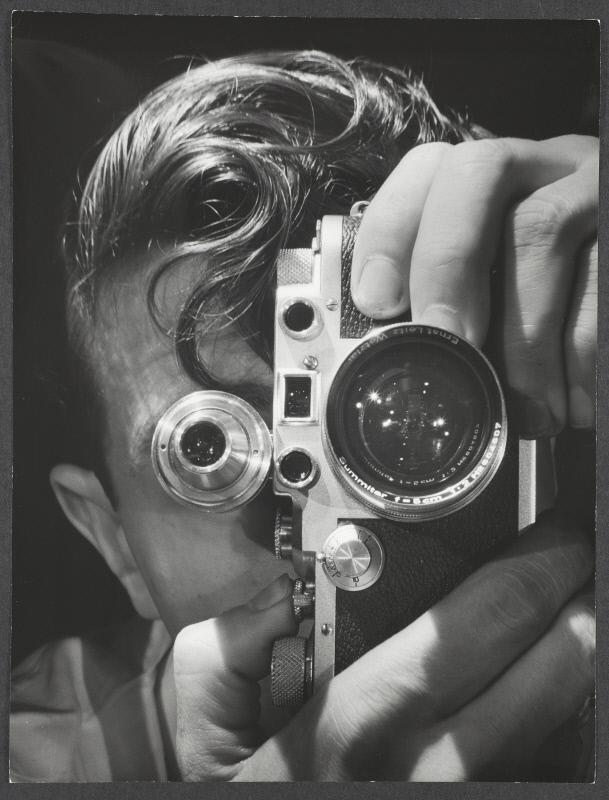
- Thematic essays
- Curated selections from the Loeb’s collection of approximately 4,800 photographs
- Individual object research
- Discussion questions
- Interpretive videos
- Detailed object views
- Bibliographies for further study
Together, these contents comprise a toolkit for integrating photography into teaching across and between disciplines—offering inspiration for syllabus development, student assignments and research projects, and classroom instruction and discussion.
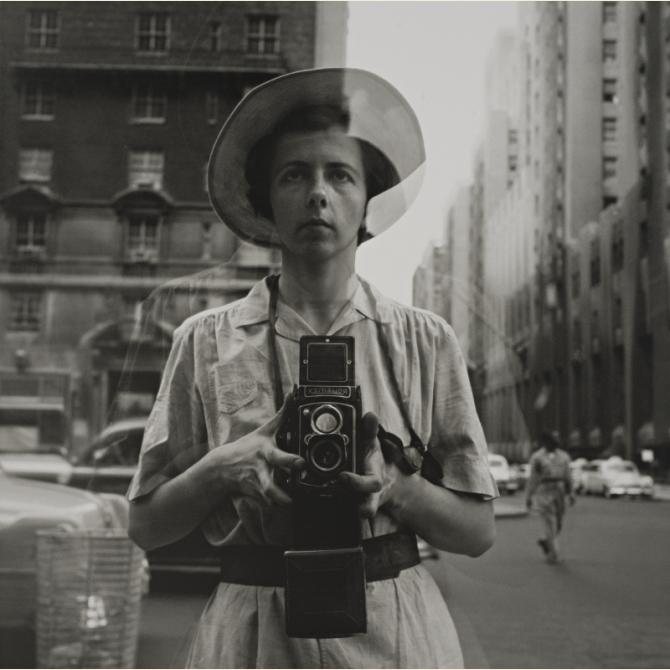
Rather than offer a single, chronological history of photography, these lessons are designed around overlapping themes that span disparate times and places. These themes emphasize the versatility of the Loeb’s photography collection in the classroom. They demonstrate the value of multiple, even conflicting, histories that embrace complexity through object-based learning in the pursuit of critical thinking, shared knowledge, and new avenues of research.
The interdisciplinarity of photography makes it especially useful as a teaching tool. Deeply personal and fundamentally public, photography touches the arts, sciences, politics, social relations, economics, spirituality, and history. It is deeply relevant to individual and collective identity and expression. The inventions, uses, and circulation of photography have radically shaped human experiences and perceptions of the modern world. Photographs are useful and engaging in a variety of courses, including history, religion, gender studies, literature, performing arts, sociology, communications, psychology, race and Africana studies, political science, anthropology, and geography.
This project features ongoing research by post-doctoral fellows, Vassar students, and post-baccalaureate fellows on photography at the Loeb. Just as this project aims to move beyond a single historical narrative and to encourage future research, it incorporates multiple voices in the interpretation of photography. The Loeb’s collection spans the early history of the medium through its contemporary practice. It includes important examples of scientific, political, journalistic, documentary, travel, architectural, fashion, portrait, journalistic, environmental, fine art, and snapshot photography.
The following sources have inspired and guided this project:
- Marvin Heiferman, ed. Photography changes Everything (New York: Aperture, 2012).
- Strange Fire Collective, Educational Resources: http://www.strangefirecollective.com/resources
- University at Buffalo Art Galleries, Thinking through photographs: A research binder of questions and thinking tools: http://ubartgalleries.buffalo.edu/wp-content/uploads/sites/53/2020/06/200605_TTP_DD_Online_Final41.pdf
- Photography Network, Online Resources: https://www.photographynetwork.net/online-resources
- Christopher Pinney and Nicholas Peterson, Photography’s Other Histories (Durham, NC: Duke University Press, 2003).
- Richard Bolton, ed. The Contest of Meaning: Critical Histories of Photography (Cambridge, MA: MIT Press, 1992).
- Michel Frizot, Pierre Albert, Colin Harding, eds. A New History of Photography (New York: Konemann, 1998).
