Naoki Honjo (Japanese, born 1978)
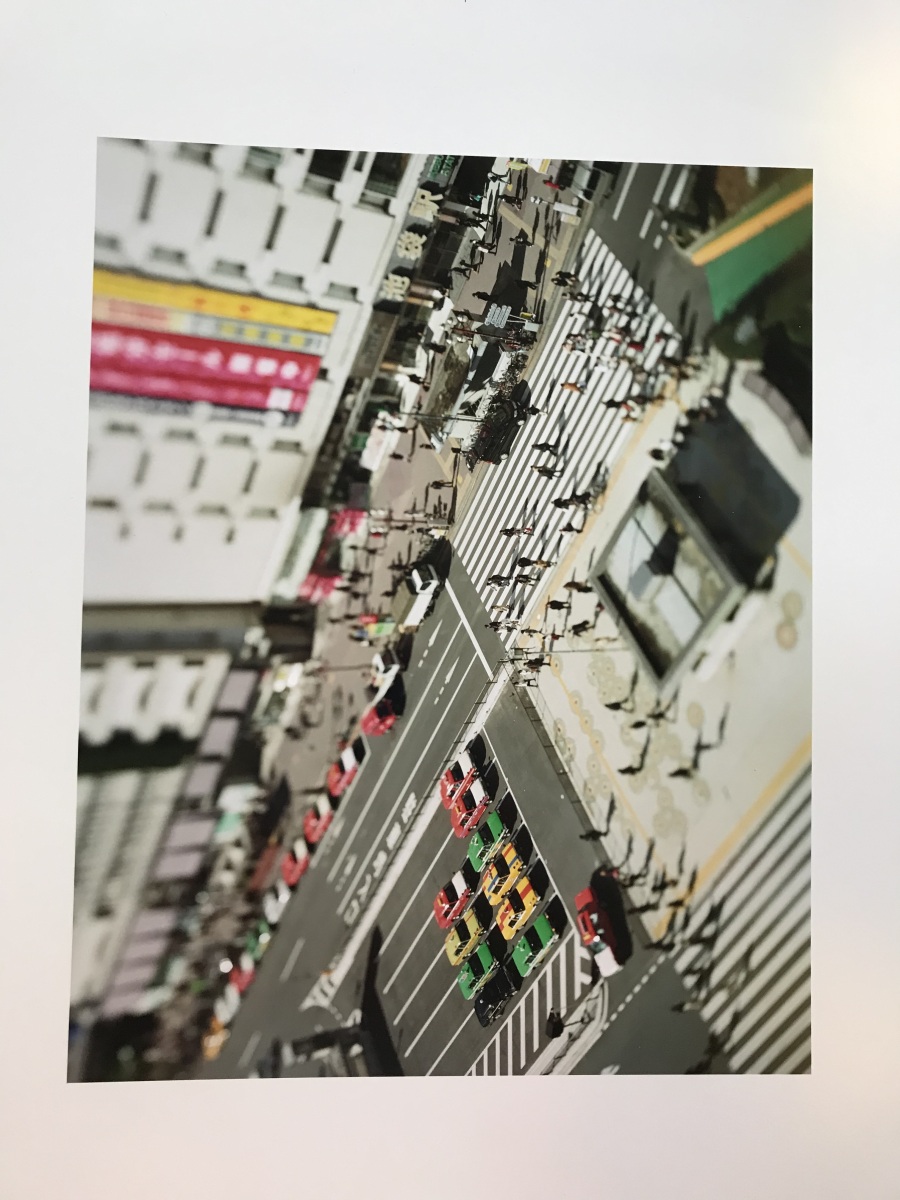
Tokyo, Japan, 2005
Chromogenic print
Purchase, Advisory Council for Photography
2009.13
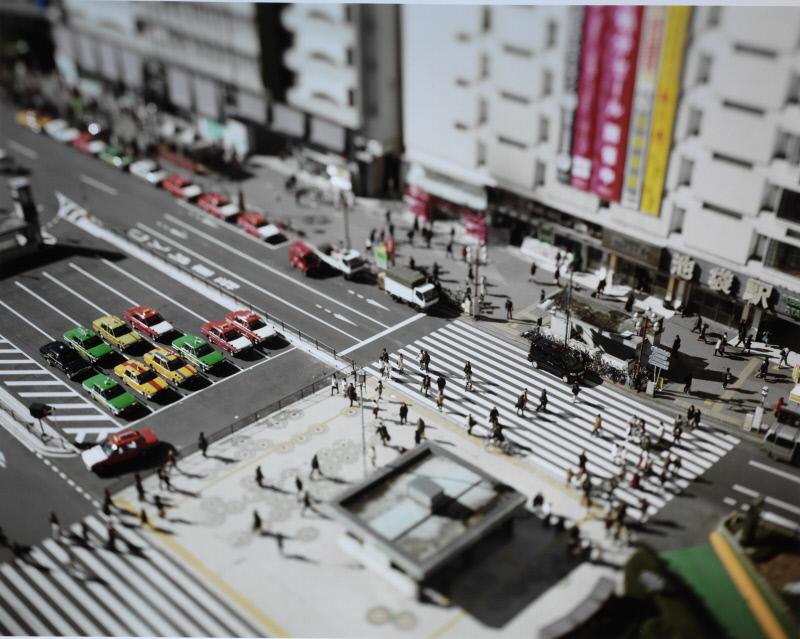
Contemporary Japanese photographer Naoki Honjo is known for his use of the tilt-shift technique to turn vast cityscapes, landscapes, and scenes of urban life into photographs that look like they were made with scale models. The tilt-shift technique is a technical manipulation of photography in which the image projected through the lens does not line up with the camera’s sensor or the film in parallel. This creates a shift in the depth of field captured in the photograph. The effects of this technique are unfocused areas of different parts of an image, making space and scale difficult to discern, and causing subjects to appear smaller than in reality. The product is often compared to diorama photography, where because of the size of the subject, only one plane is in focus if the photo is taken with a wide aperture.
While this process can be replicated using Photoshop or with an Instagram filter, Honjo uses the manual method of tilt-shift when photographing with a 4×5 camera. Additionally, he often photographs from a helicopter or from a tall building. Through this process, Honjo is able to capture frames of life that appear as though the viewer is looking at a play set. Conceptually, Honjo’s dedication to the craft of making a real cityscape appear artificial conjures larger questions about what is real and what is fake, which are ever present in Honjo’s work and inherent to the medium of photography.
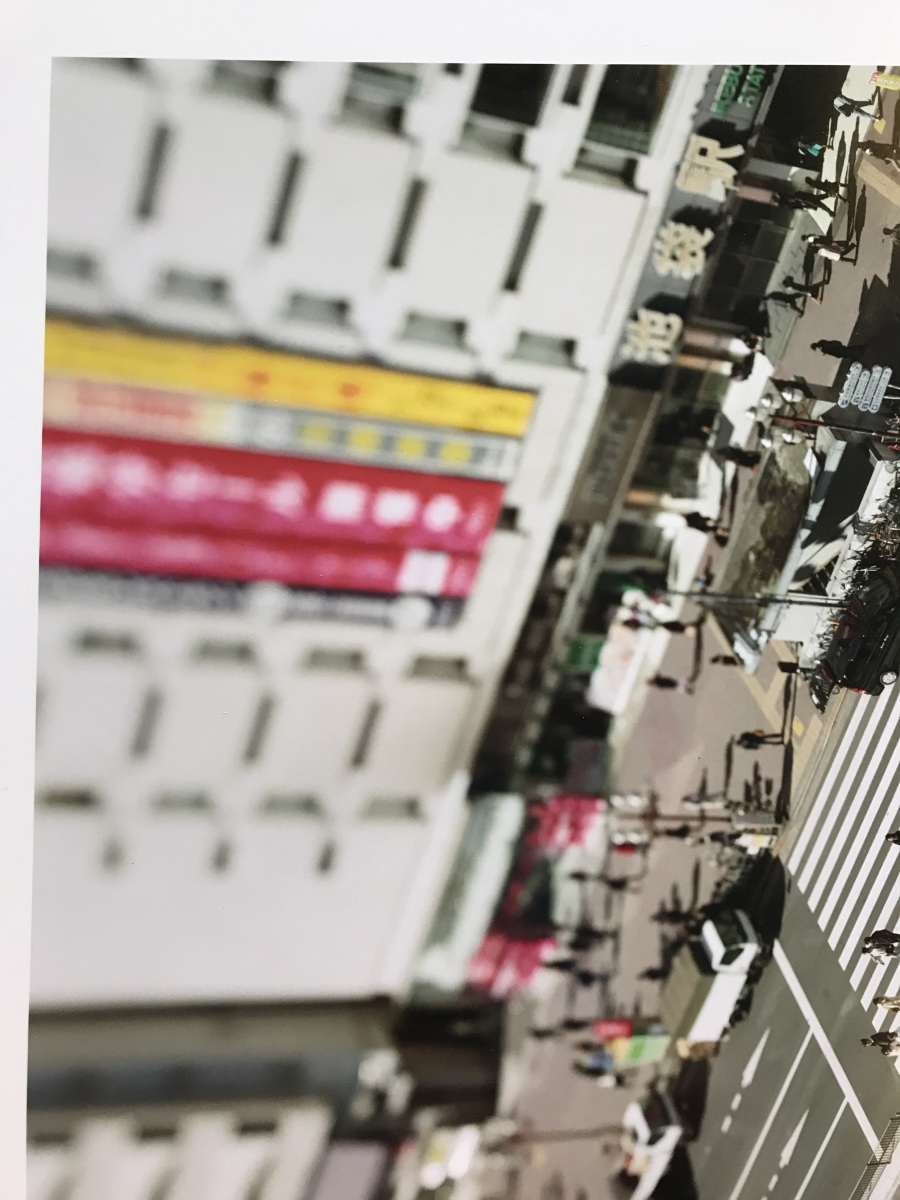
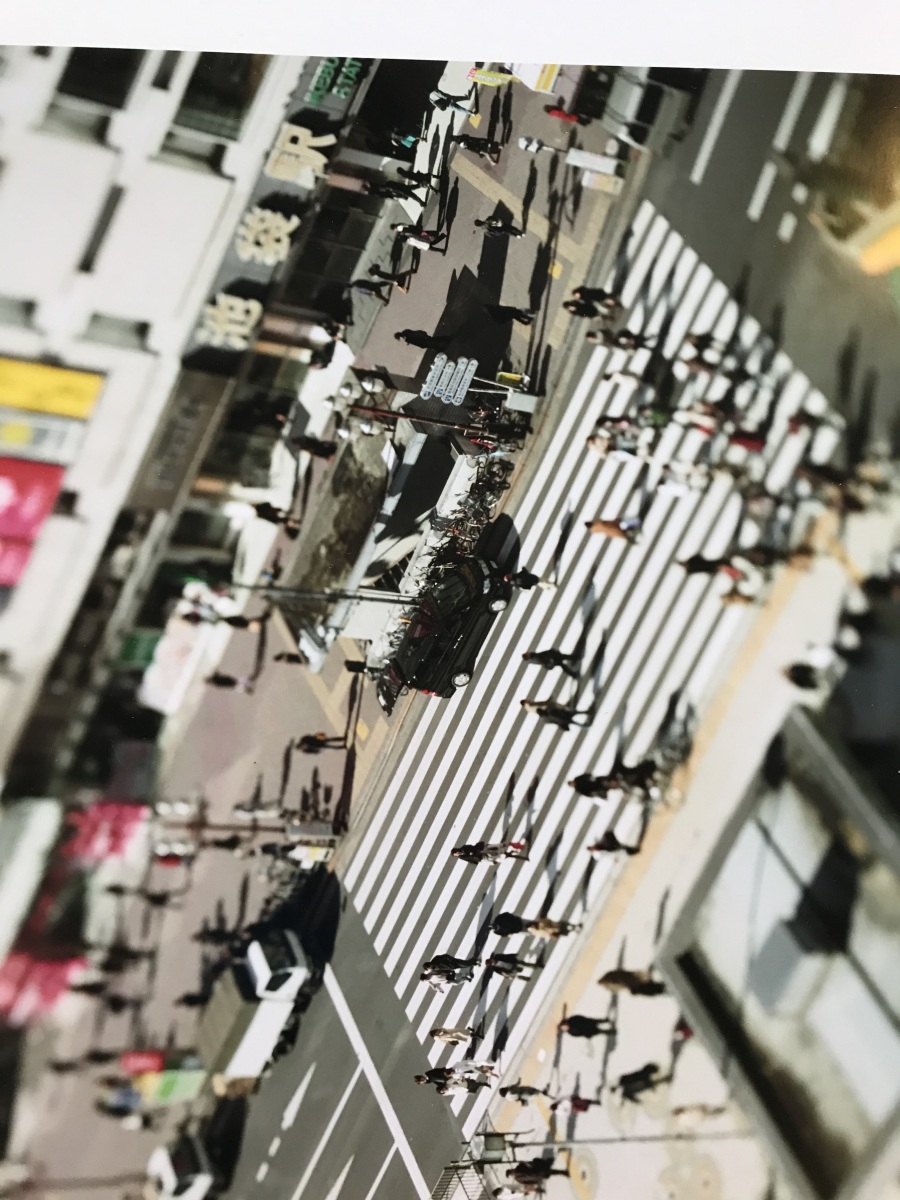
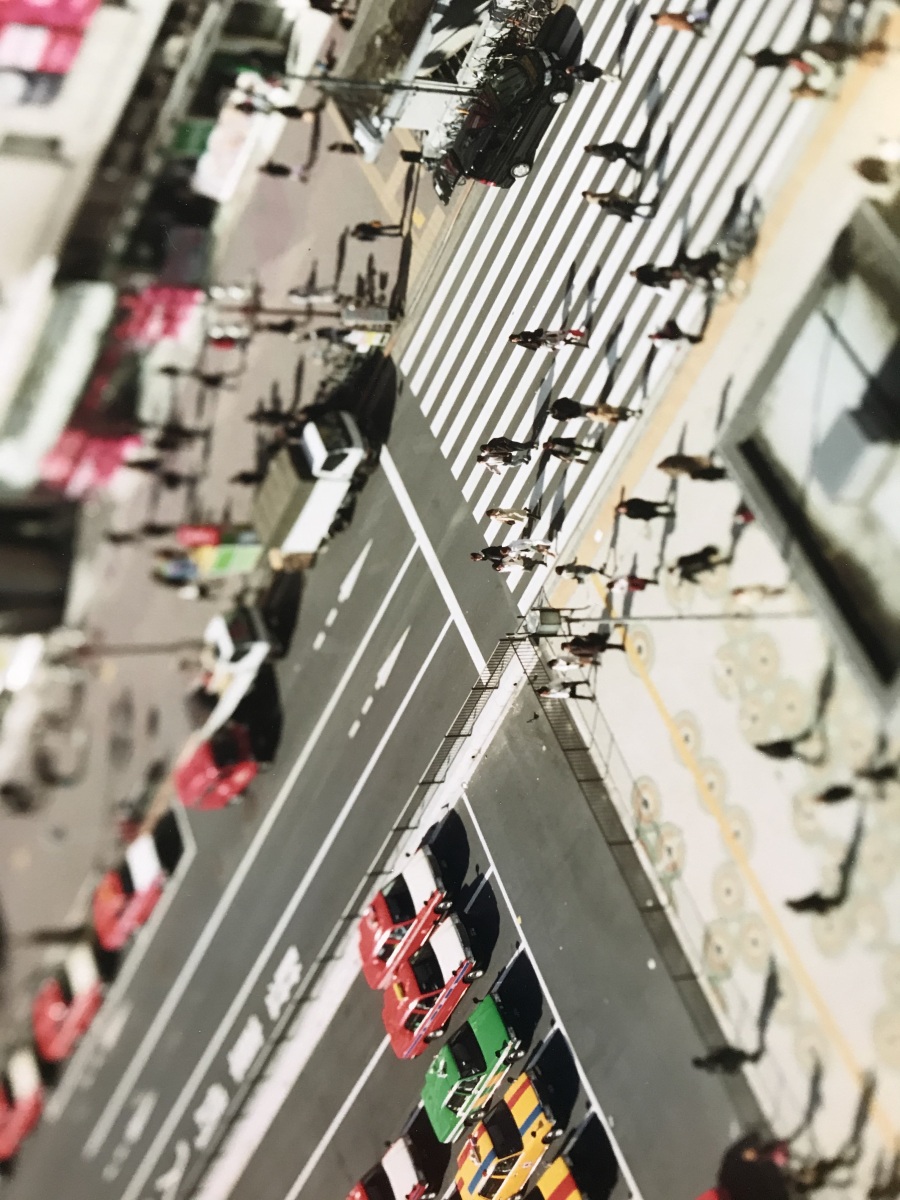
This photograph depicts Ikebukuro Station in Tokyo, a major transportation hub of one of the biggest cities in the world. It is the convergence point of five train lines and three subway lines, which is directly connected to shopping malls, department stores, and a major commercial area. It is a lively area that thousands of people pass through each day. However, in contrast to the usually bustling area surrounding the station, this photograph shows the pedestrians and cars stopped in time, stationary, as if the city had always been an artificial plaything, and the citizens are carefully arranged game pieces. Because the tilt-shift technique makes subject matter appear much smaller and model-like than it is in reality, the scene has an atmosphere that would be uncannily familiar but simultaneously unrecognizable to the daily Tokyo commuter. Yet, despite this visual effect, the photograph is still a depiction of the city in a particular moment in time. While cut out of frame near their bases, the buildings towering over the pedestrians evoke the feeling of human diminutiveness and curiosity.
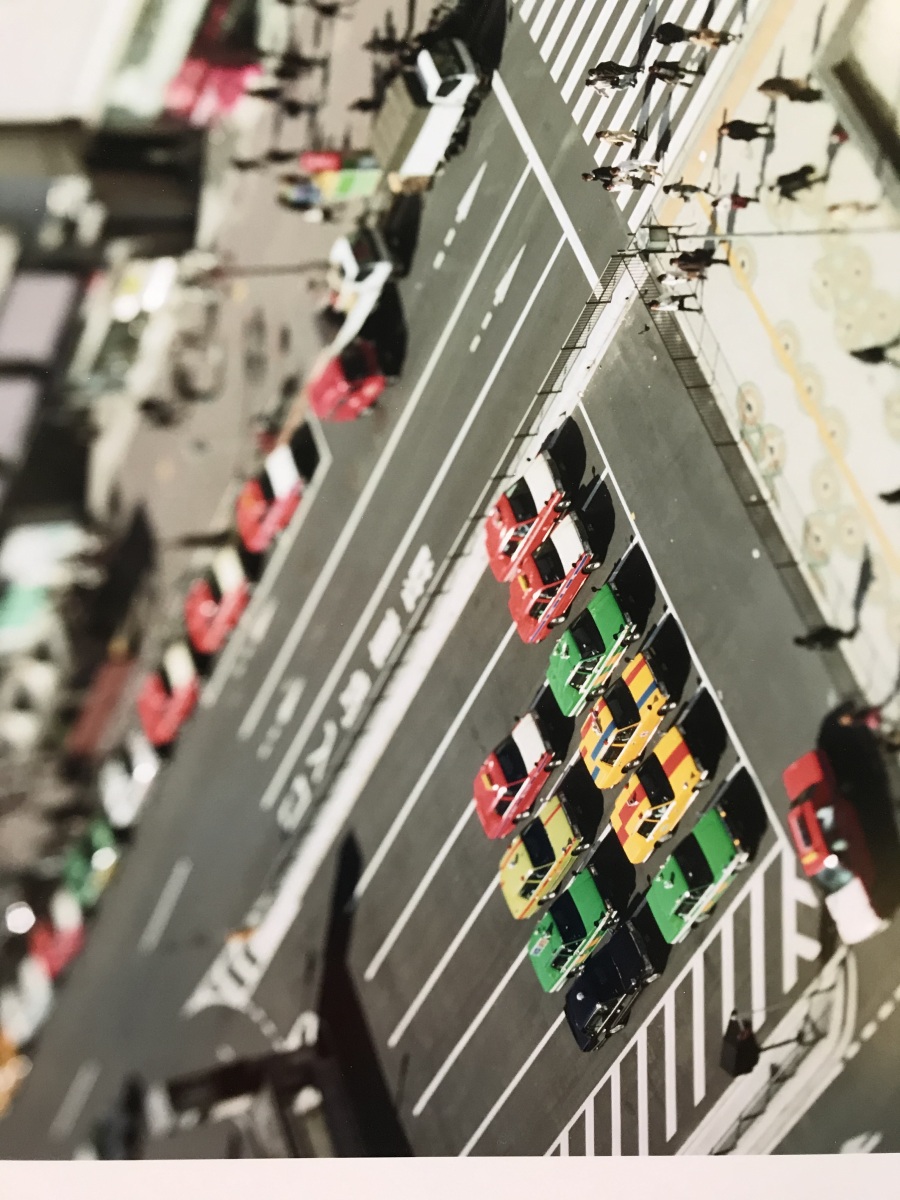
In order to make this photograph, Honjo waited for days until cars had lined up as though they were toys. By taking this time, waiting for the perfect moment to capture this reality on a diminutive scale, he constructed a reality in his head to replicate in a photograph. Contemporary viewers may associate this with image editing software, however Honjo achieves the same result with completely analog techniques. This emphasizes the tension between real and fake that Honjo strives for in his work. Every part of this photograph could have been edited or rendered digitally, but Honjo intentionally makes analog technique part of the final product of his work. By effectively turning the Tokyo cityscape into what looks like a model of life, Honjo acknowledges that photography necessarily always fails to perfectly capture reality, instead giving us a visual simulation.
Olivia Feltus (VC ’21), Loeb Student Docent, 2021
Further Reading:
1. Fong, Cherise, “Photographer reviews of small, small world,” CNN World. X
2. Rawlings, Ashley, “‘Naoki Honjo — The Metropolis in Miniature,'” The Japan Times, June 1, 2006. https://www.japantimes.co.jp/culture/2006/06/01/arts/naoki-honjo-the-metropolis-in-miniature/
3. “The Images of Naoki Honjo Attract Widespread Interest,” ARTnews, April 15, 2008. https://www.artnews.com/art-news/news/the-images-of-naoki-honjo-attract-widespread-interest-1422/
4. “Tokyo Through the Lense of Naoki Honjo,” DayDreamTokyo, June 13, 2015. https://daydream-tokyo.com/2015/06/13/tokyo-through-the-lense-of-naoki-honjo/
5. https://www.asahi.com/and_w/writer/honjyo_naoki/
6. On the artist’s website: http://honjonaoki.com
7. In the collection of the Metropolitan Museum of Art, New York: https://www.metmuseum.org/art/collection/search/289148
8. Nap Gallery: https://napgallery.jp/en/artists/naoki-honjo/
Look Closer