Edward Jean Steichen (American, b. Luxembourg, 1879-1973)
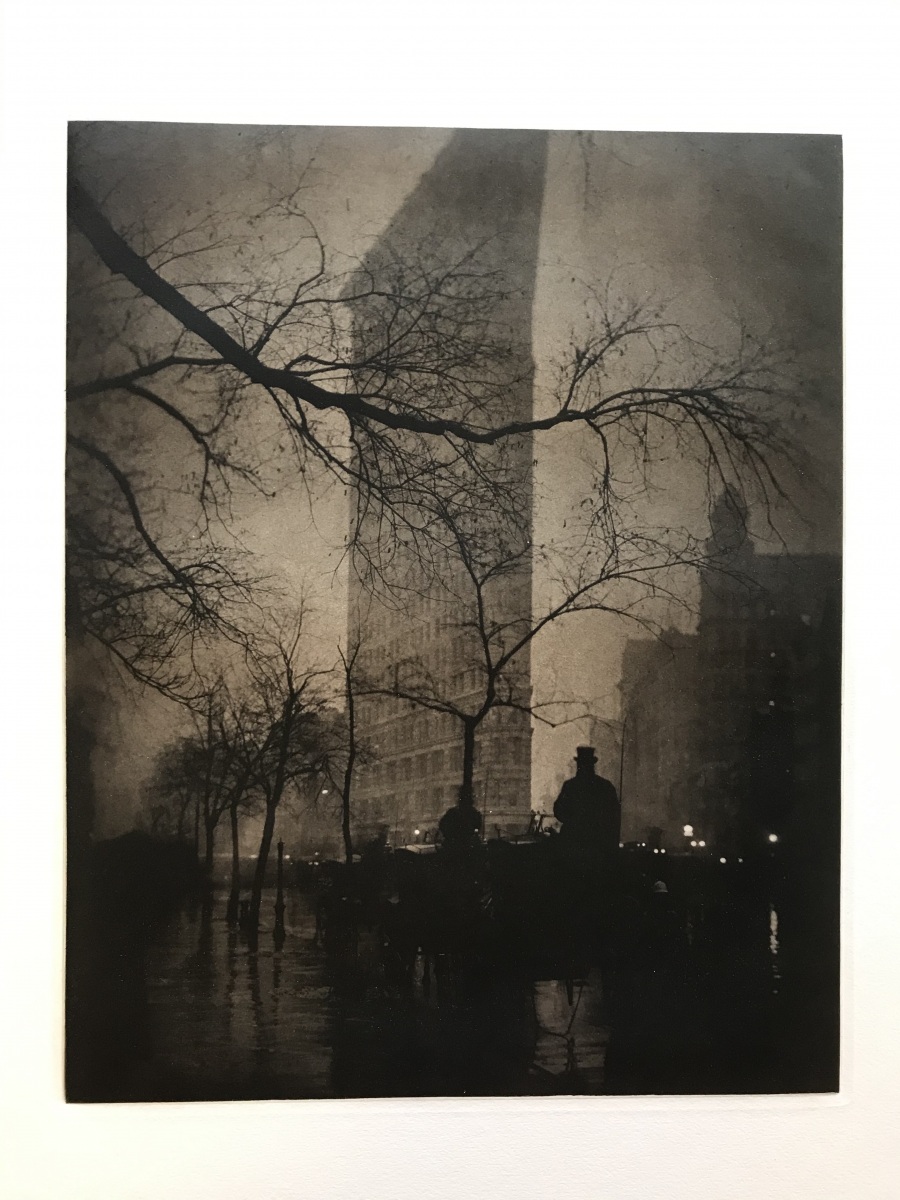
The Flatiron, New York, from The Early Years, 1900-1927 Portfolio, 1905
Photogravure
Purchase, E. Powis and Anne Keating Jones, class of 1943, Fund
1981.68.8
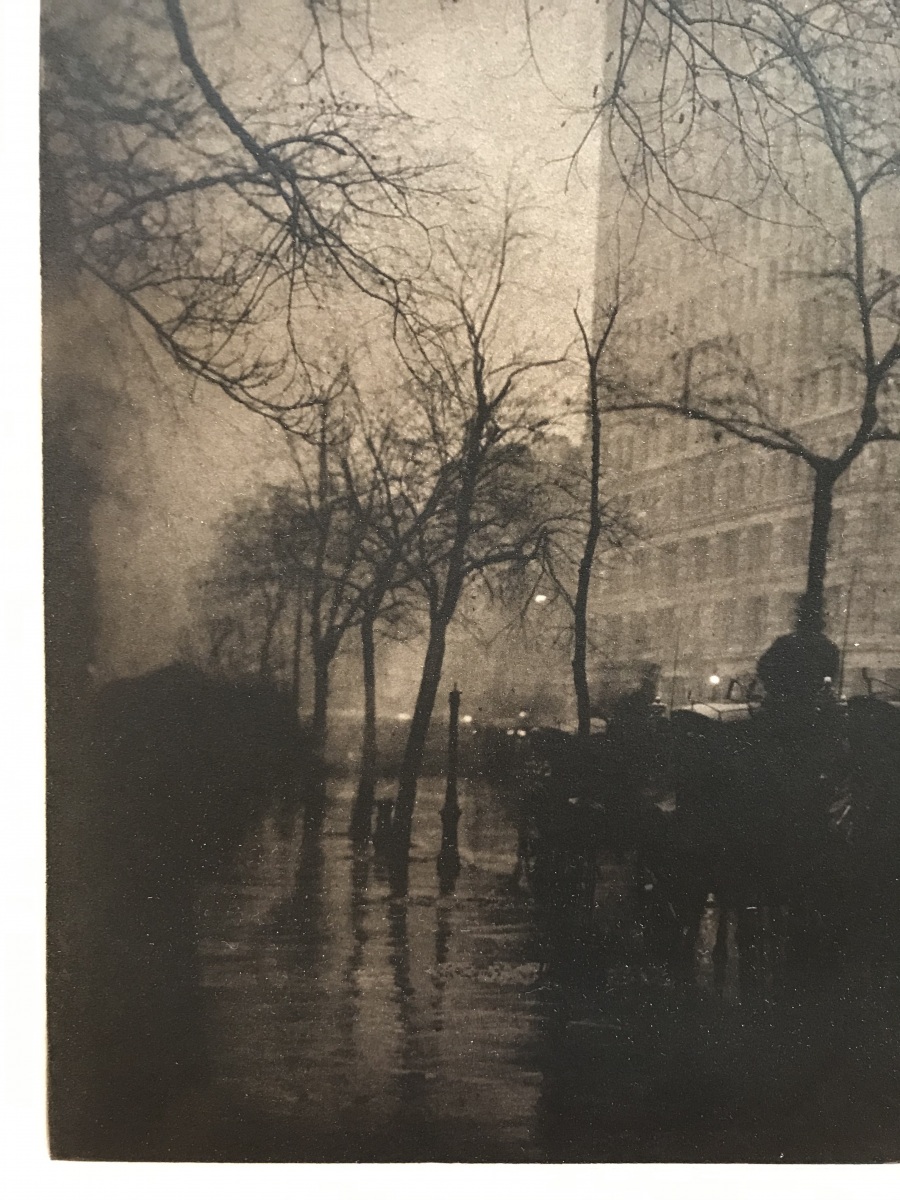
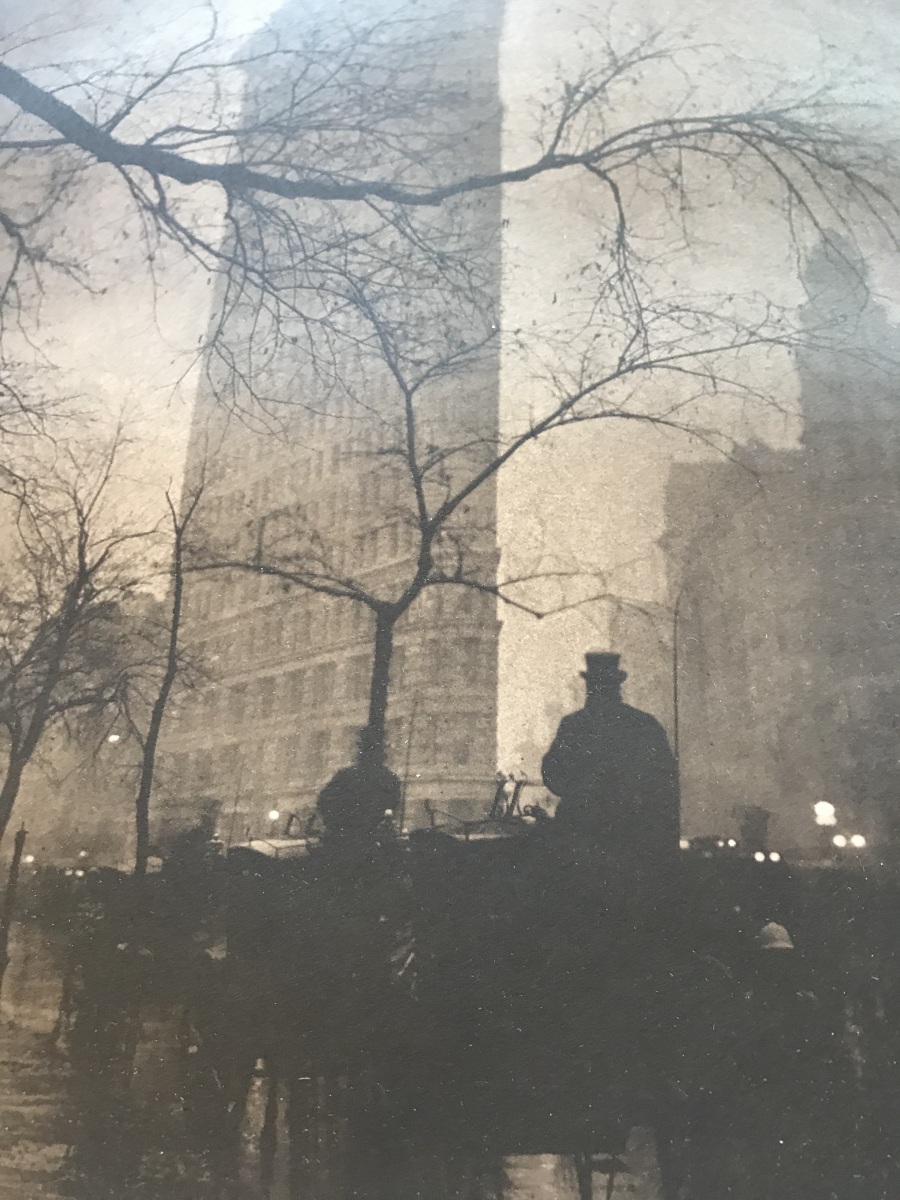
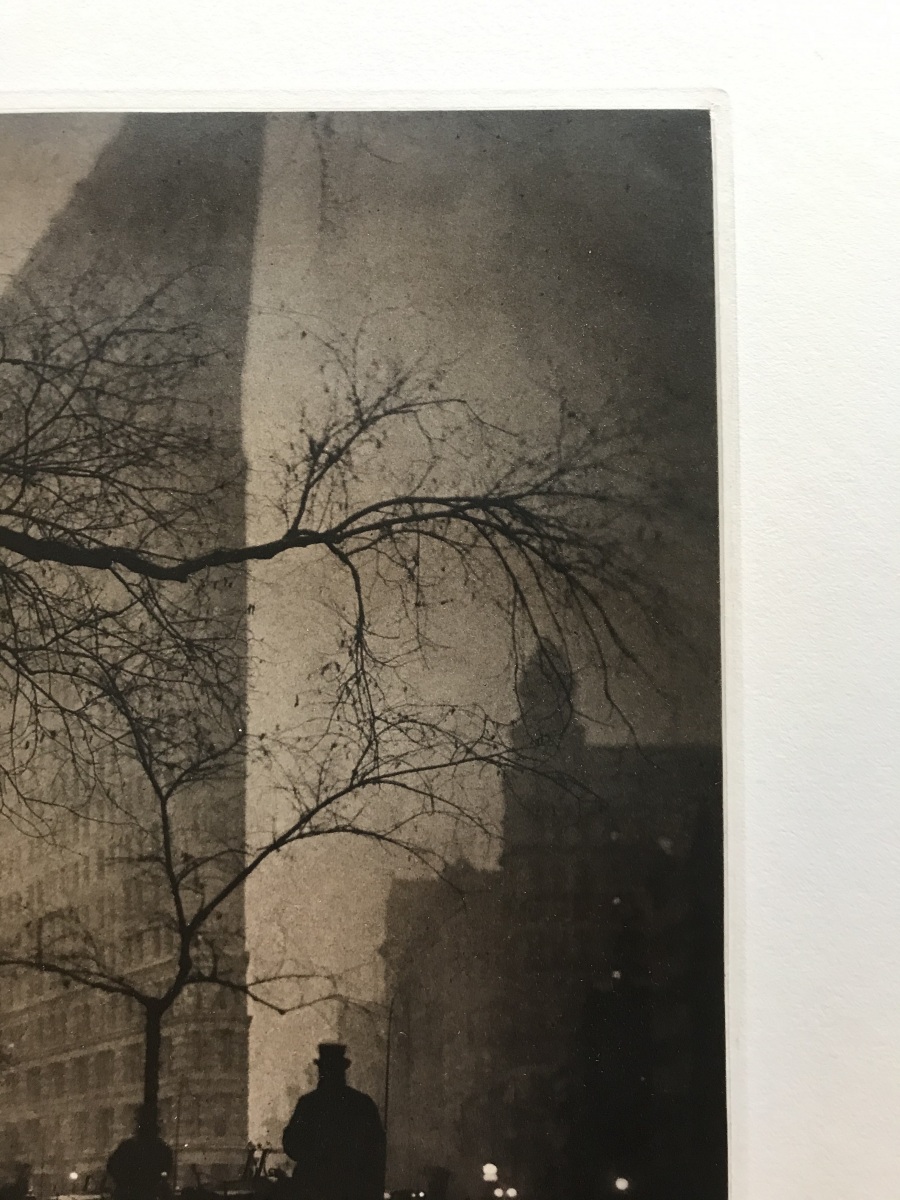
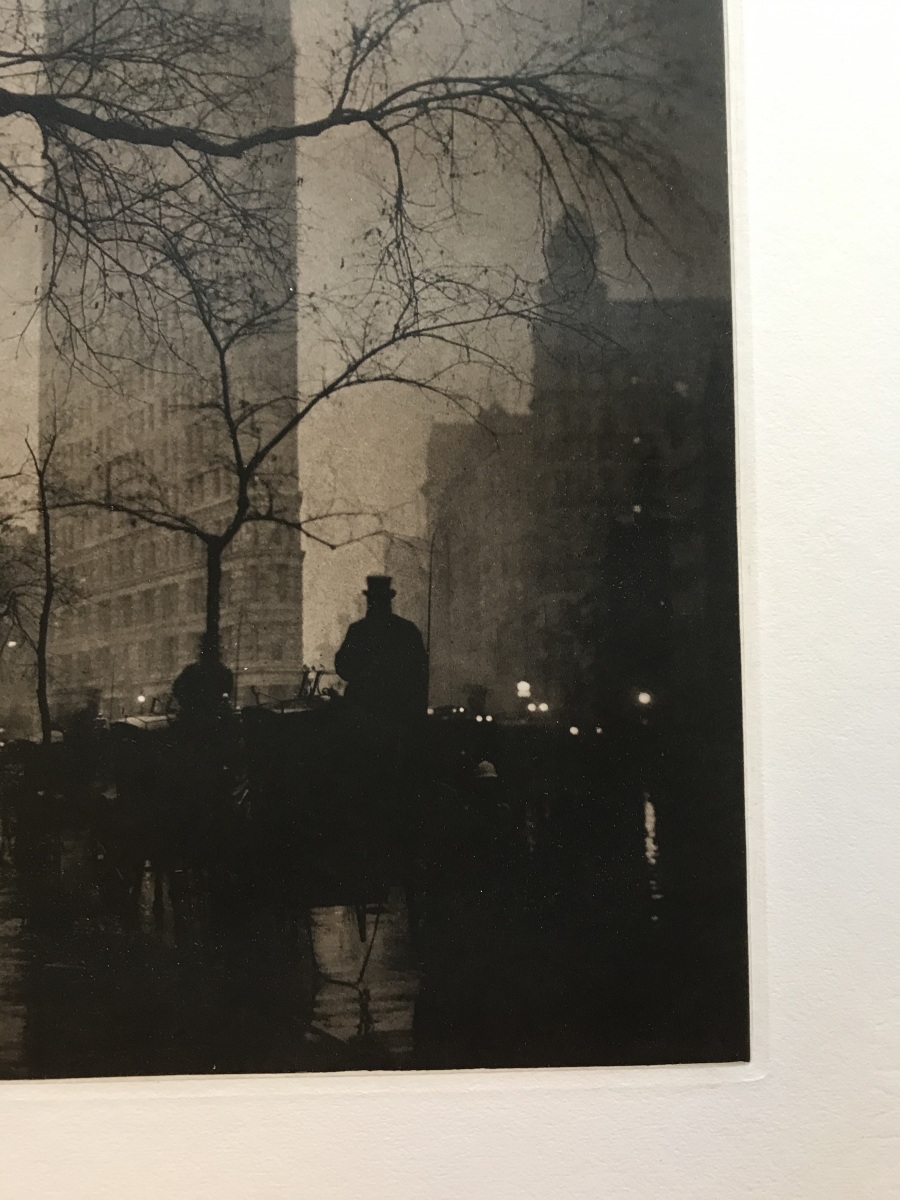
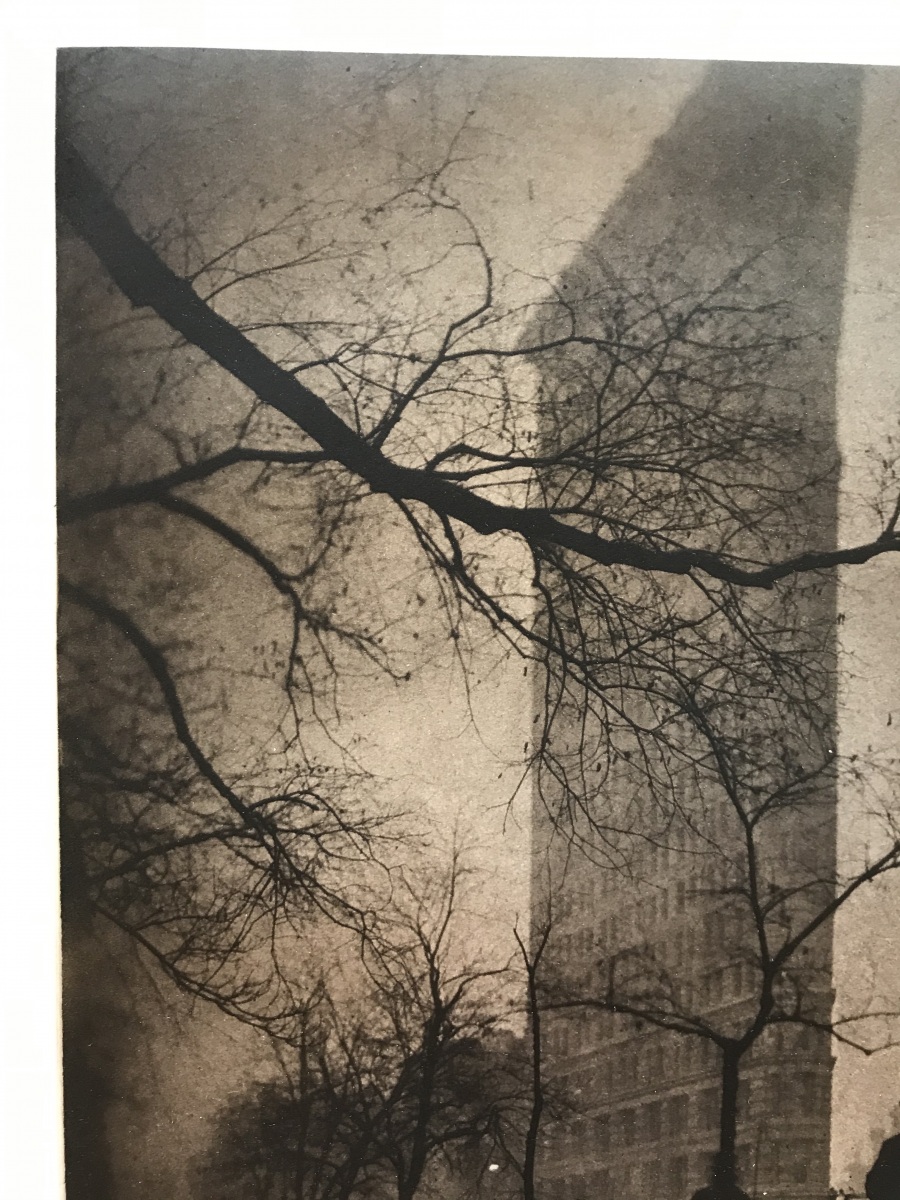
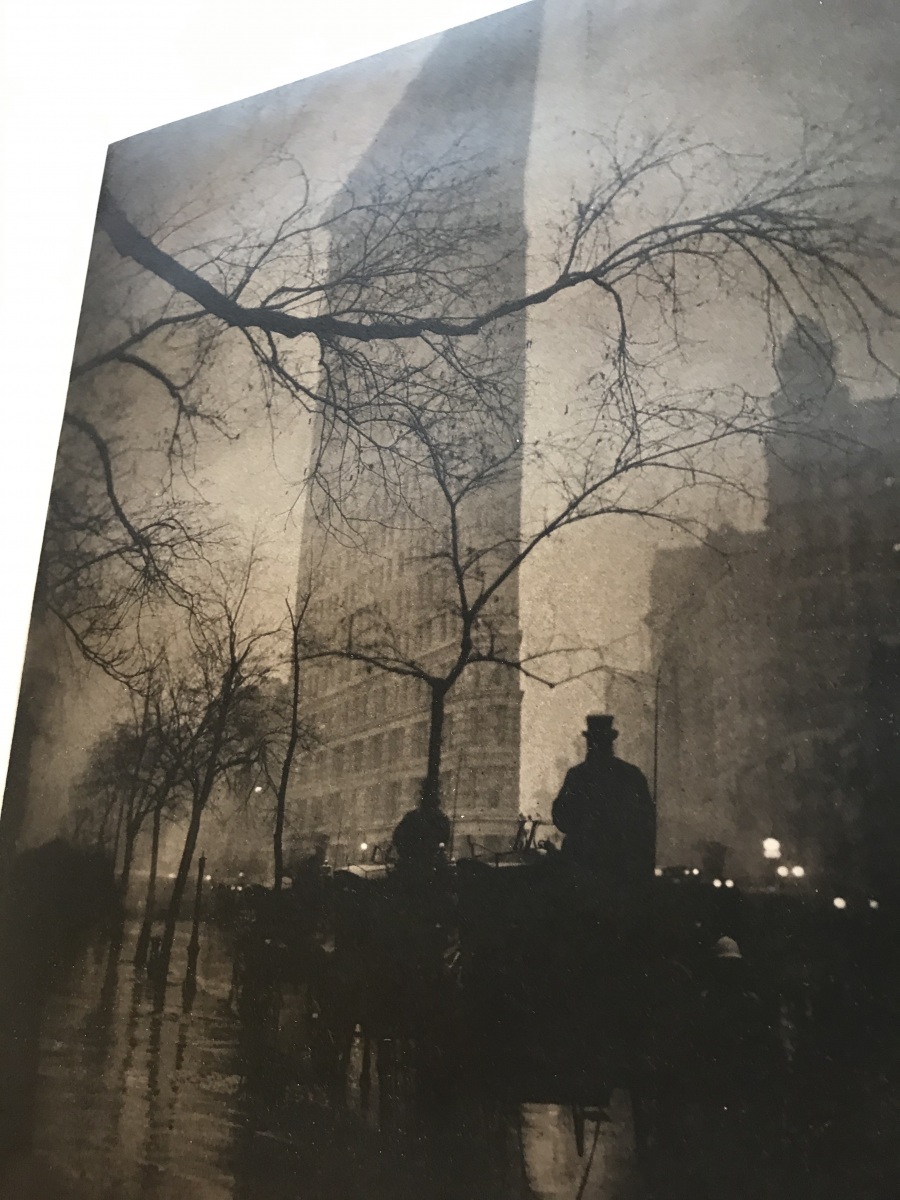
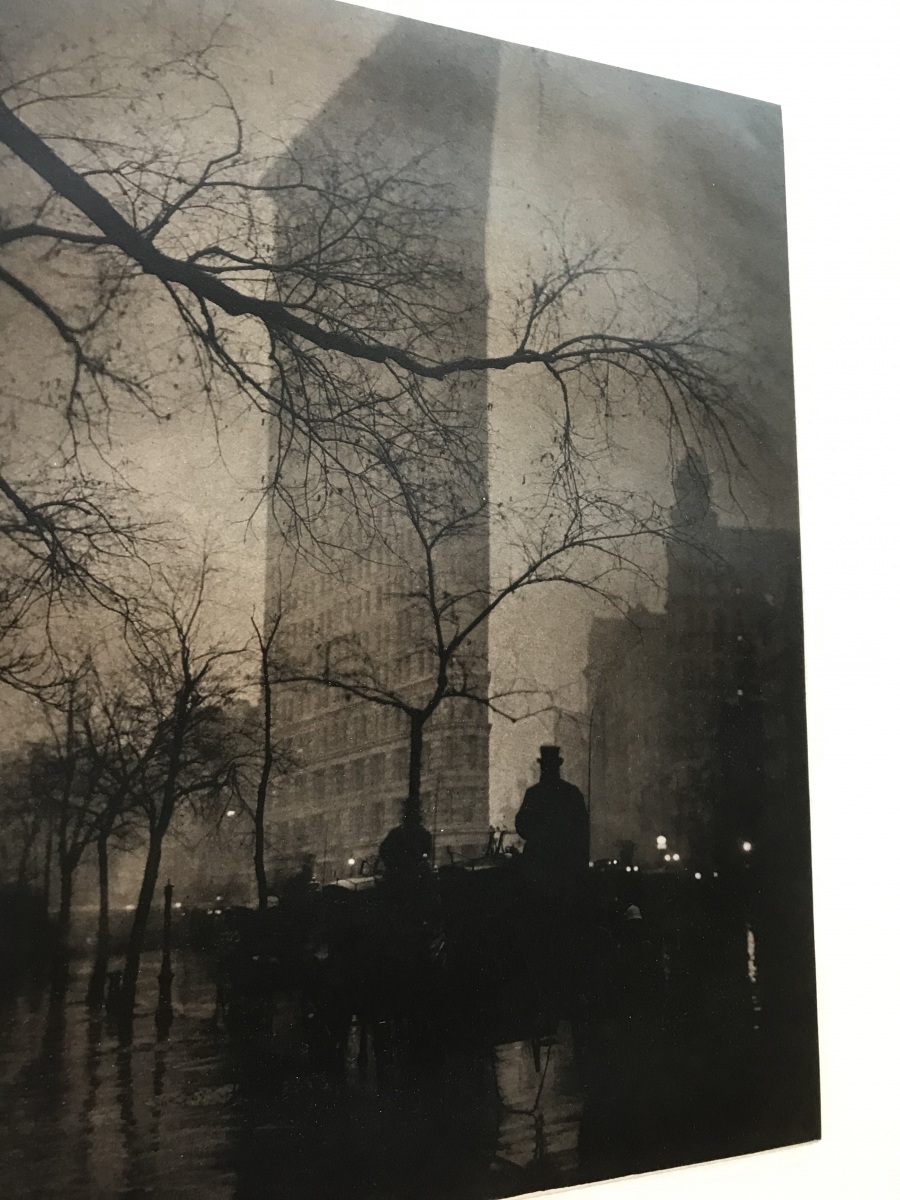
The Flatiron by Edward Steitchen is an example of pictorialist photography, known for its experimental use of tones and materiality. Pictorialism became popular around the turn of the twentieth century in response to critiques that the relatively new medium of photography was not appropriate for “fine art.” Pictorialist photographers used more labor intensive techniques and materials, such as gum bichromate printing and platinum printing. They rejected the claim that photography could not be an artistic pursuit because it was created with a machine (the camera). The photogravure process gives Steichen’s photograph a softened texture, creating a more painterly feeling. The photograph appears almost grainy or foggy because of this softer texture, which makes the dark grey tones appear to blend together the way painters blend pigment. The overall atmosphere is almost sinister because of these muted tones and suggestion of fog or mist in the air. Steichen’s use of the pictorialist style is particularly interesting when approaching the subject of the Flatiron building. Photography is a mechanical medium and the Flatiron is a modern, industrial building, yet Steichen used the pictorialist style to transform the Flatiron into something that appears soft and naturally textured. The mysterious and foreboding atmosphere seems to suggest a degree of skepticism toward the skyscraper, and perhaps even a rejection of new industrialized architecture.
The Flatiron building, designed by Daniel Burnham and completed in New York City in 1902, was particularly impressive for its unusual, triangular shape and use of steel construction. Steel was especially important to architecture in the early 1900s because it allowed buildings to be stronger and taller, thus enabling skyscrapers to spring up in big cities like New York. The building is designed in the Beaux-Arts style. Its exterior design mimics a classical column, divided into three horizontal parts equivalent to a base, shaft, and capital, and finished with limestone and Terracotta. This design is hard to discern from the hazy grain of the photograph. Nevertheless, Steichen’s photograph gives the impression of a towering skyscraper, standing twenty two stories above Madison Square, by cropping the image at the top such that the building is not contained by the photograph. There is a careful balance between achieving an expressive, pictorialist style that rejects photography as purely mechanical, and featuring the industrialization of Manhattan, offering an awe-inspiring depiction of this new and soon-to-be-iconic building.
Chloe Richards, Loeb Student Docent, 2020-21
Further Reading:
- Christian A. Peterson, After the Photo-Secession: American Pictorial Photography, 1910–1955. New York: W.W. Norton, 1997.
- Andrew Roth, ed. Book of 101 Books: Seminal Photographic Books of the Twentieth Century, New York: Roth Horowitz / PPP Editions, 2001.
- Weston J. Naef, The Collection of Alfred Stieglitz: Fifty Pioneers of Modern Photography. 1st ed. New York: The Metropolitan Museum of Art, 1978. no. 480.
- Joel Smith, Edward Steichen: The Early Years. Princeton: The Metropolitan Museum of Art, 1999. pl. 18.
- Lance Jay Brown and David Dixon, Urban Design for an Urban Century: Shaping More Livable, Equitable, and Resilient Cities (2nd Edition), Hoboken, NJ: Wiley, 2014.
Look Closer